
LET’S TALK TURKEY!
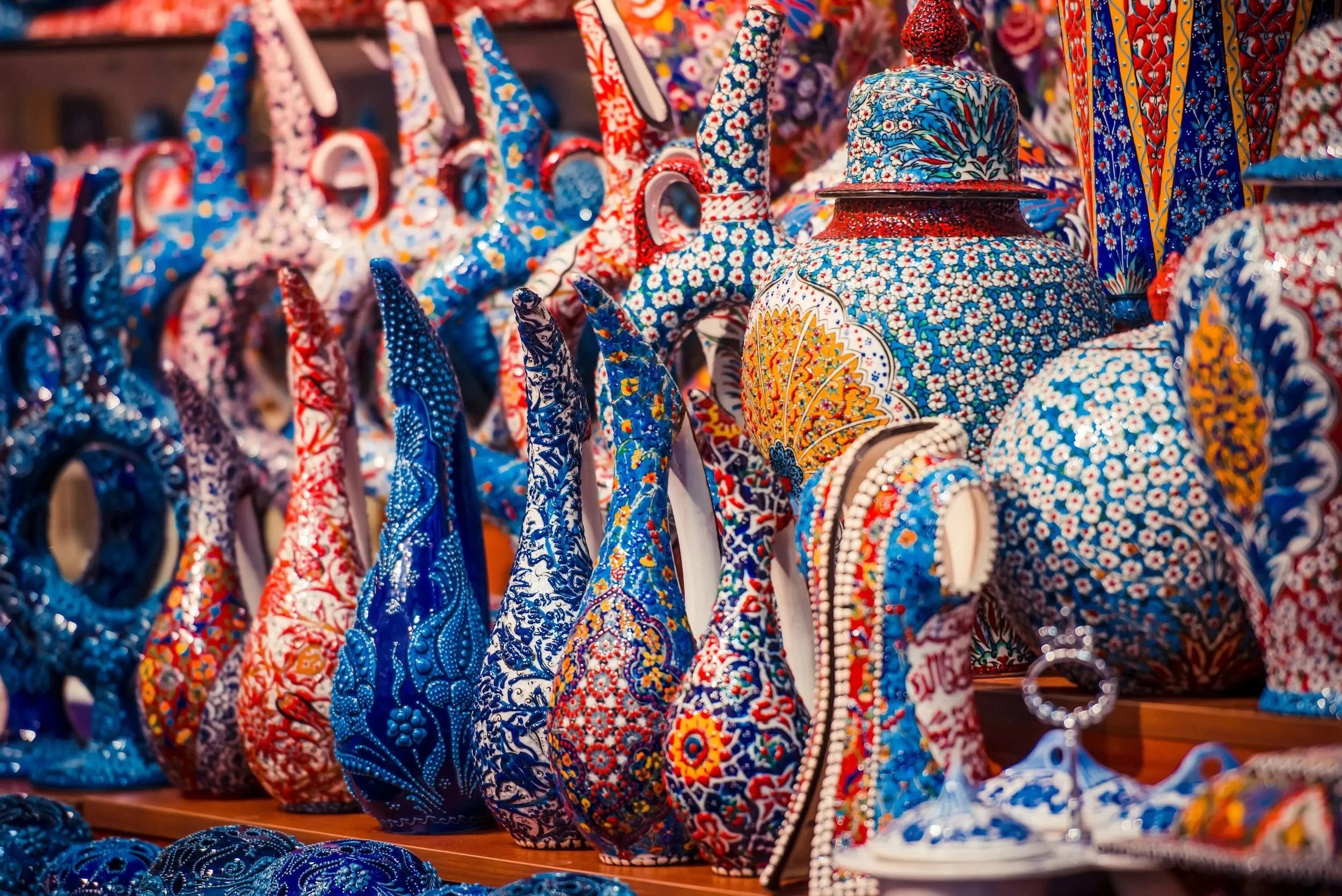
From the turquoise sweep of the Aegean Sea to the minaret-studded skyline of Istanbul, Turkey enchants travellers with a richness that feels both exotic and warmly familiar. Along the shores of the Turkish Riviera, sun-drenched beaches meet crystalline waters, while inland, the otherworldly rock formations of Cappadocia rise like a dreamscape best admired at sunrise from a drifting hot-air balloon. And in bustling bazaars scented with spice and coffee, centuries of trade and tradition come alive. Add to this a cuisine that ranges from sizzling kebabs to delicate baklava, a heritage shaped by empires, a culture that celebrates hospitality as an art form, and Turkey becomes not just a destination, but an experience that lingers long after the journey ends.
ISTANBUL
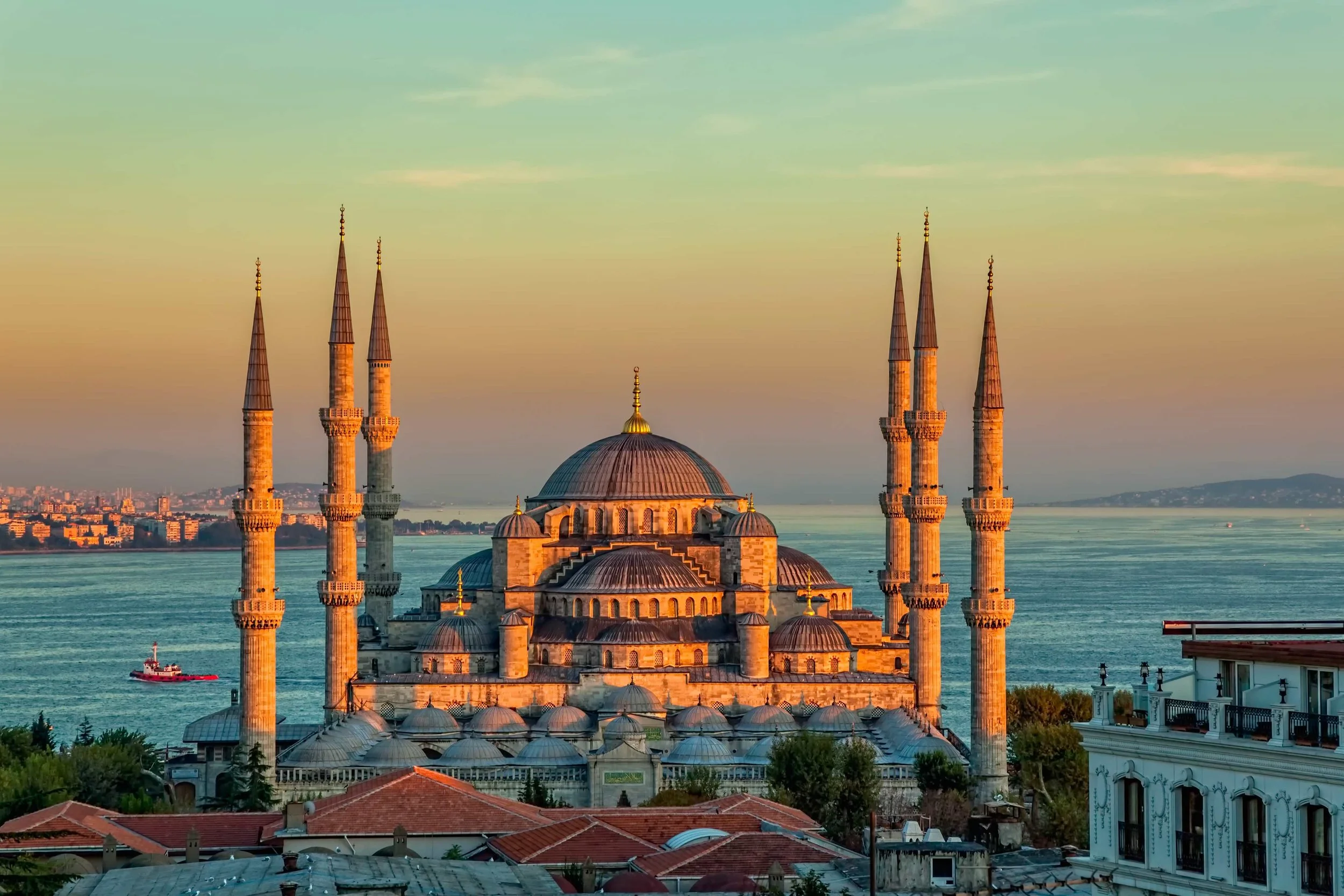
This city of 20 million people stands at the crossroads of civilizations, where history is not preserved behind glass but lived every day. Istanbul is a bridge between worlds. Straddling Europe and Asia, divided by the shimmering Bosphorus Strait, it is the only city on Earth that spans two continents. And it has served as the capital of three great empires: Roman, Byzantine, and Ottoman. This layered past gives the city an architectural and cultural richness unlike anywhere else. The majestic Hagia Sophia, once a cathedral, then a mosque, then a museum, and now a mosque again, stands as a symbol of this extraordinary transformation. And just across the historic square stands the elegant Blue Mosque blending faith, art, and history all in one skyline.
The uniqueness of Istanbul lies in its fusion of Eastern traditions and Western modernity, of Islamic architecture and Byzantine mosaics, of ancient bazaars and sleek rooftop cafes. The Grand Bazaar, one of the oldest and largest covered markets in the world, still hums with trade as it has for centuries. And the cuisine reflects this crossroads identity influenced by the Balkans, the Middle East, Central Asia, and the Mediterranean. From street vendors to refined Ottoman palace dishes, food in Istanbul tells the story of migration, empire, and exchange. On a single day, you can hop a quick ferry from Europe to Asia, hear the call to prayer echo across modern business districts, and walk through Roman cisterns beneath busy streets. Istanbul is ancient, contemporary, chaotic, and spiritual all at once.
CAPPADOCIA
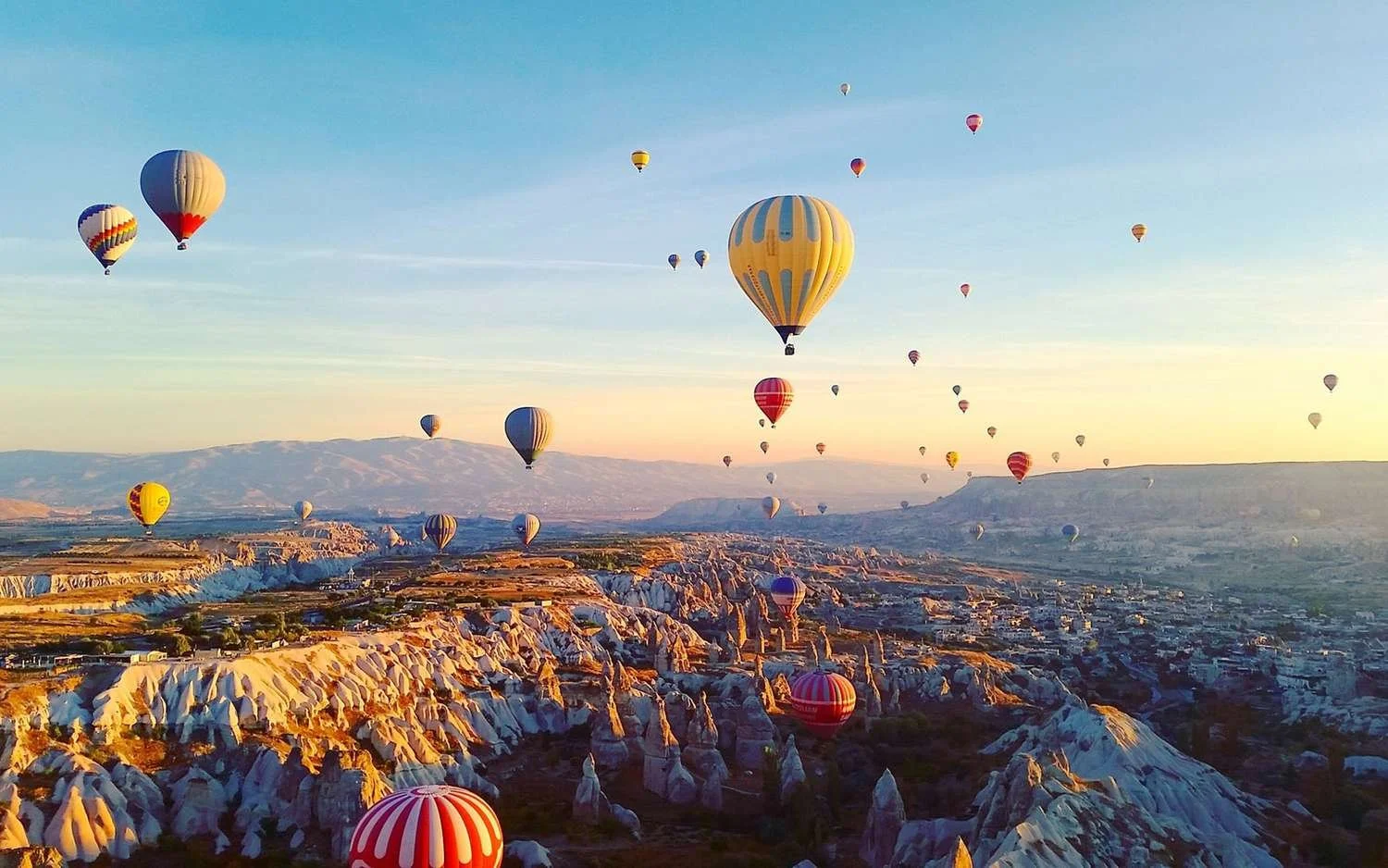
In Central Anatolia, the steppes of Cappadocia feel like another world. Carved by ancient volcanic eruptions and shaped by centuries of wind and rain, its surreal landscape of “fairy chimneys,” soft stone valleys, and rose-tinted cliffs is unlike anywhere else on Earth. The region’s cone-shaped rock formations and sweeping valleys create a dreamlike setting—especially at sunrise and sunset when the stone glows pink and gold. Whether you’re hiking through Love Valley or watching shadows stretch across the hills, the scenery constantly shifts and surprises.
Cappadocia isn’t just beautiful—it’s also deeply historic. Early Christians carved churches, monasteries, and entire underground cities into the soft rock. The frescoes at the Göreme Open-Air Museum offer a glimpse into a spiritual and artistic heritage that dates back over a thousand years. And few travel experiences rival floating above Cappadocia at dawn when dozens of colorful balloons rise with the first light, drifting over rock formations, vineyards, and cave villages. Even watching from the ground is unforgettable.
Sleeping in a boutique cave hotel—built directly into ancient rock dwellings—adds to the magic. These spaces combine rustic stone walls with modern comfort, immersing you in the destination. Enjoy traditional Turkish breakfasts, pottery workshops in Avanos, and evenings spent sipping tea while overlooking the valleys . The pace is relaxed, the people are welcoming, and the atmosphere encourages you to slow down and soak it in.
EPHESUS
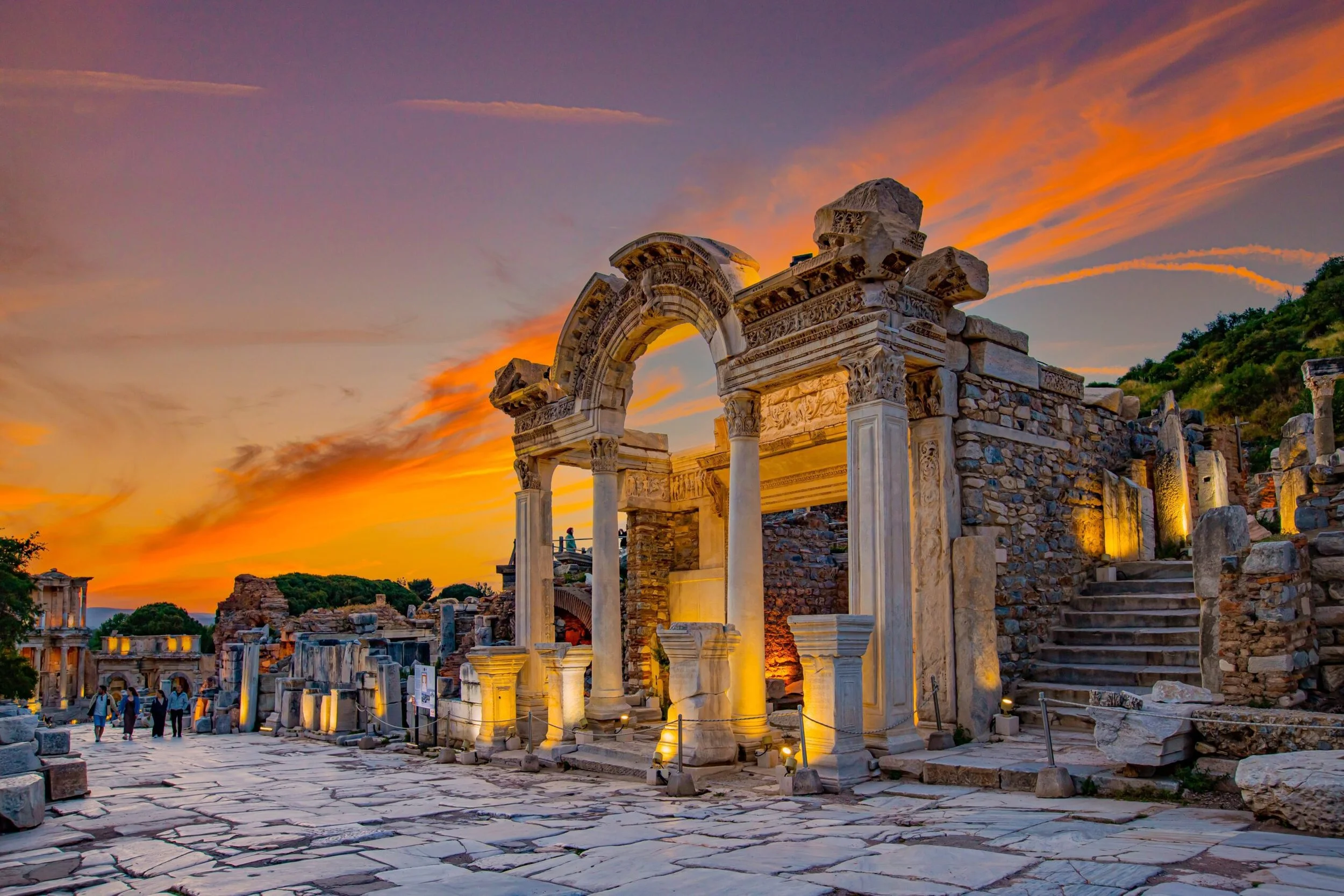
On my recent adventure through Turkey, we saved this jaw-dropper for last. Once a thriving metropolis on the western coast of Asia Minor, Ephesus was one of the most important cities of the ancient Mediterranean world. Founded by Greek settlers in the 10th century BCE and later flourishing under Roman rule, it became a major center of trade, culture, and religion. The city was home to the legendary Temple of Artemis—one of the Seven Wonders of the Ancient World—and later played a significant role in early Christianity, with the Apostle Paul preaching there and tradition linking it to the Gospel of John. Today, walking through Ephesus is a journey into antiquity: wander marble-paved streets, stand before the grand façade of the Library of Celsus, and sit in the vast Great Theatre where thousands once gathered. The remarkably preserved ruins, framed by rolling hills and Mediterranean light, create a powerful sense of connection to the ancient past, making Ephesus one of the most evocative archaeological sites in the world.
Getting there
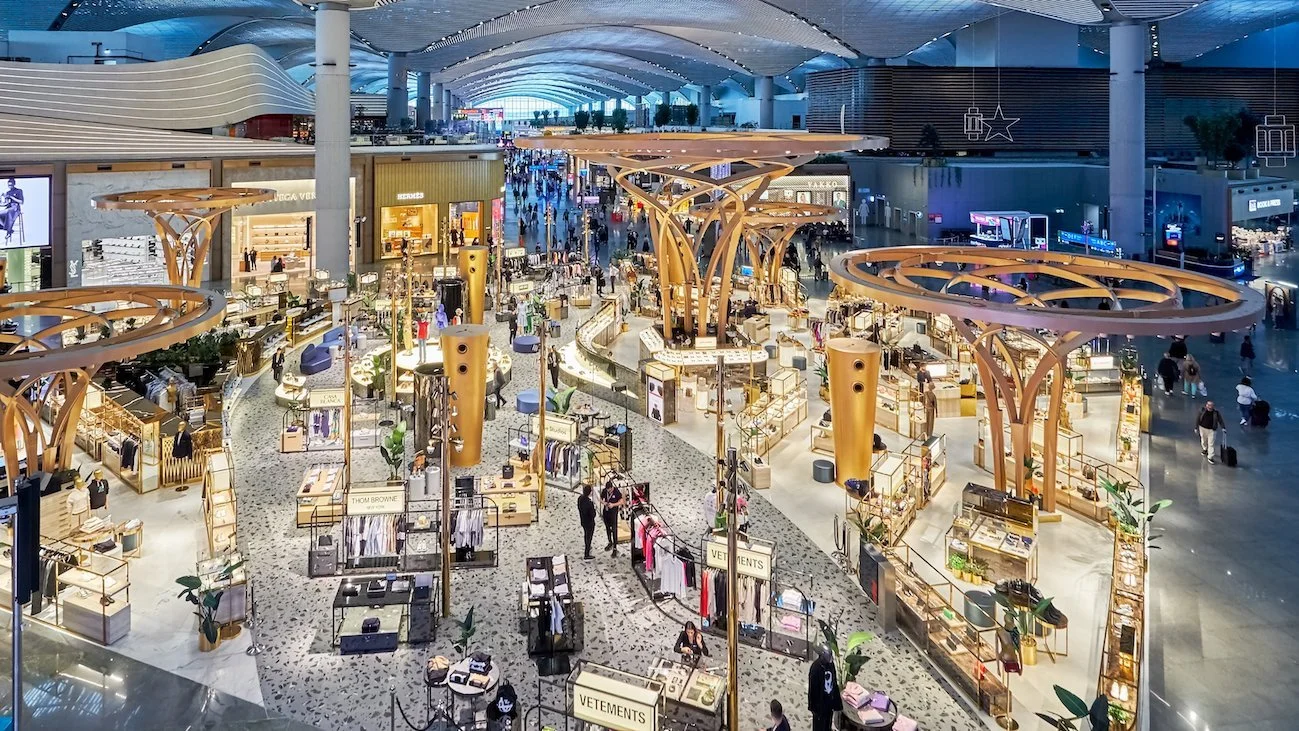
The modern Istanbul Airport opened in 2018 and is designed as a mega-hub capable of serving vast volumes of passengers. It is the world’s most connected airport serving 300+ destinations in 110 countries. Turkish Airlines, the nation’s flagship carrier, plays a major role by operating an expansive global route. My recent flight, for example, was direct from Seattle - a 12h trip made easy! And for lounge enthusiasts, the Turkish Air lounge at IST is absolutely legendary. One thing to note: the airport is sprawling with five concourses but there is not a train to whisk travelers from one to the other. Allow plenty of time for long walks (and a bit of shopping) when making connections.